

MIL-STD-810 Method 503 Thermal Shock Test Chamber | SONACME
Publish Time:2026-08-25Views:()
Test Standard: MIL-STD-810H Method 503.7 — Temperature Shock
Military semiconductor components operate in the harshest environments on Earth — from the -55°C cold of arctic deployments to the +125°C heat of engine compartments, often transitioning between these extremes in minutes. A radar system moved from a heated hangar to a -40°C flight line experiences a temperature shock. A guided missile transported from desert storage to high-altitude launch undergoes rapid decompression and temperature change simultaneously. MIL-STD-810 Method 503 is the standard that defines how to test for these scenarios.
The Operational Reality: Why Military Semiconductors Face Extreme Thermal Shock
Military-grade semiconductors — whether COTS (Commercial Off-The-Shelf) devices screened to military requirements, or purpose-built MIL-STD-883 compliant devices — must survive thermal environments that commercial components never encounter. Key military thermal shock scenarios include:
· Air-to-air deployment: Equipment transferred from a heated aircraft cabin (-18°C at altitude) to ground operations in desert heat (+50°C+)
· Storage-to-operation transitions: Missiles stored at -40°C in arctic depots, then activated in warm conditions
· Vehicle-mounted systems: Electronics in armored vehicles transitioning from cold-soak to engine-bay heat
· Naval applications: Shipboard electronics exposed to rapid temperature changes when moving between climate-controlled interiors and open decks
Each of these scenarios can cause immediate failure or latent damage that manifests as field failure weeks or months later.
MIL-STD-810H Method 503.7: Requirements and Procedures
Method 503.7 defines three procedures for temperature shock testing:
Procedure I — Constant Cycle Shock:
· Two temperature extremes, constant throughout the test
· Typical: +71°C and -57°C (or +71°C and -54°C)
· Transfer time: ≤1 minute
· Dwell time: 1 hour or until thermal stabilization
· Cycles: 3 minimum (most programs require 25+)
Procedure II — Cycle Sequence Shock:
· Temperature extremes vary across cycles to represent diurnal/mission cycles
· More representative of actual field exposure
Procedure III — Multiple Threat Shock:
· Multiple temperature extremes in a single cycle
· Used for multi-environment platforms
The standard emphasizes that test temperatures should be derived from the anticipated life cycle environment (LCE) of the materiel, not generic default values.
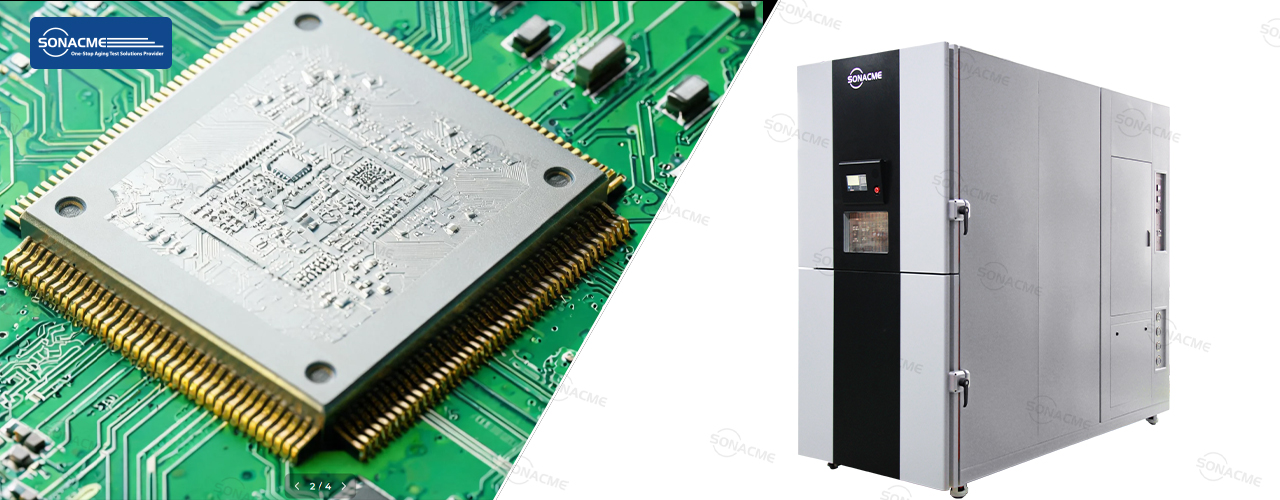
SONACME Two-Zone Thermal Shock Chamber: Built for MIL-STD-810 Compliance
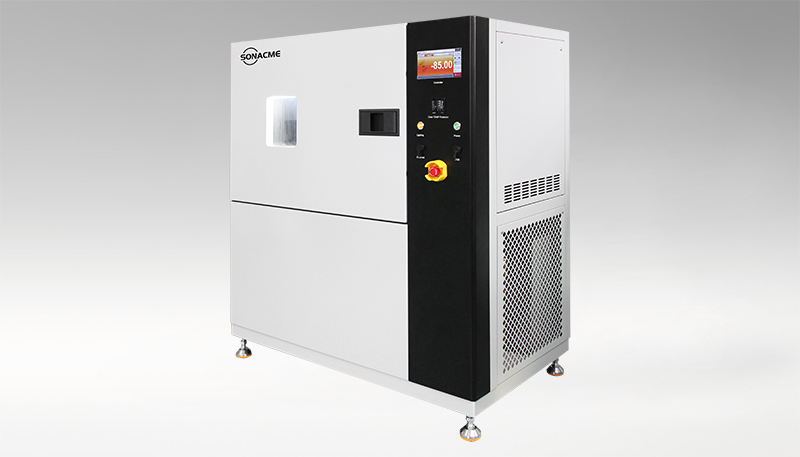
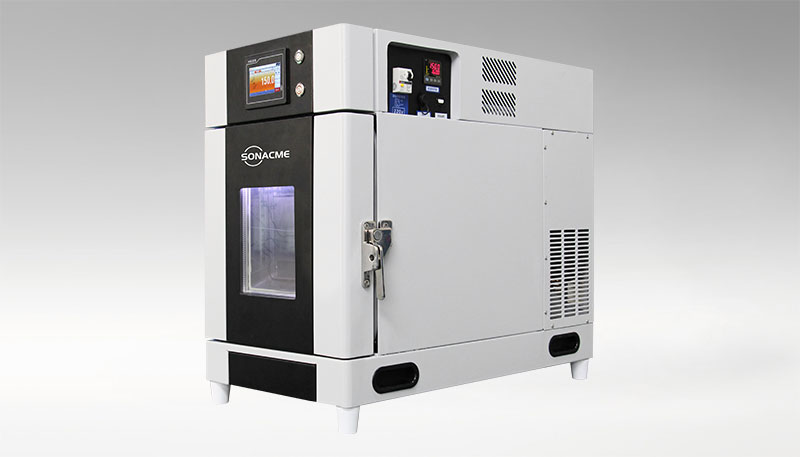
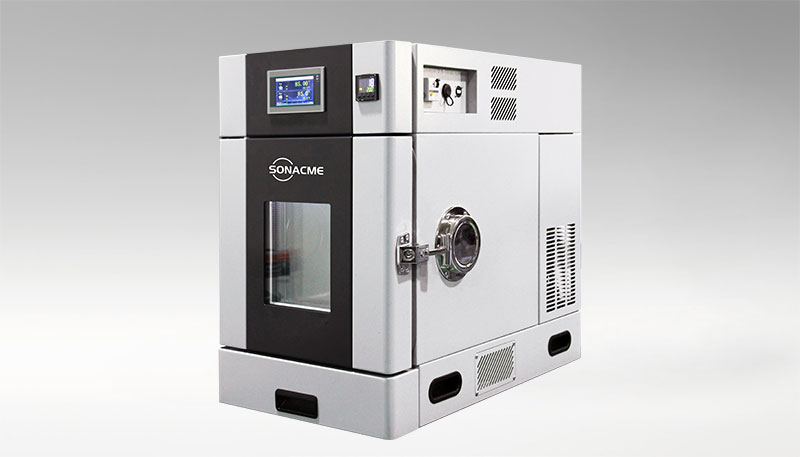
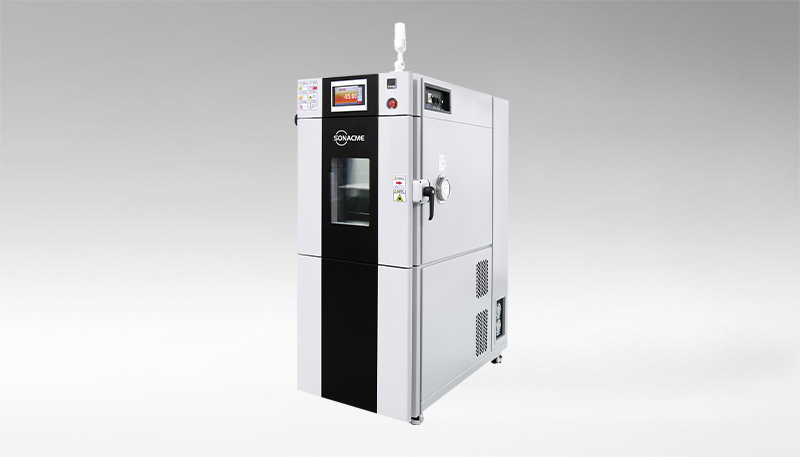
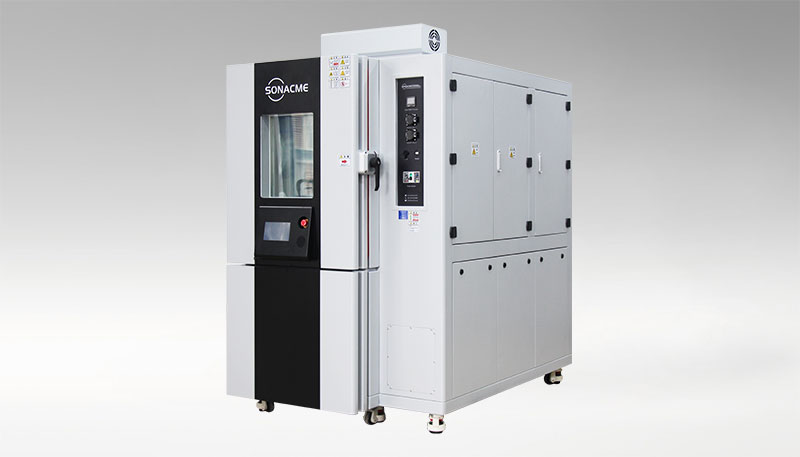
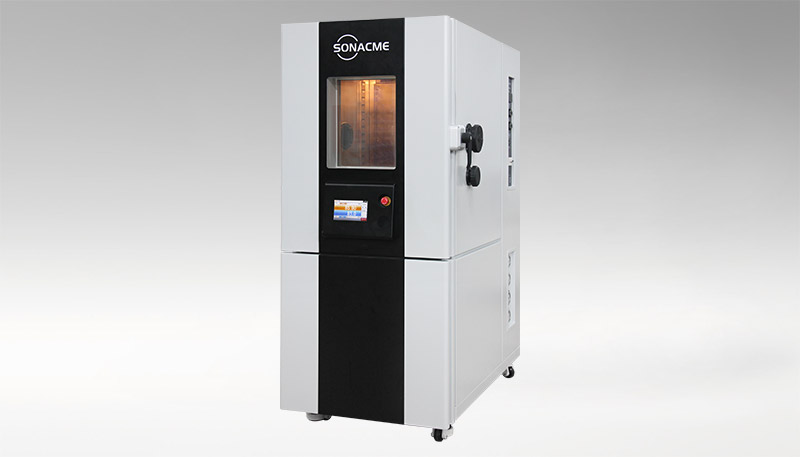
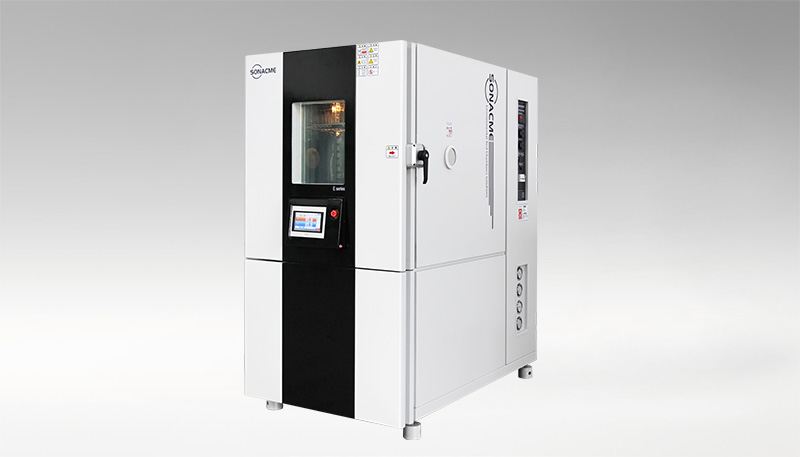
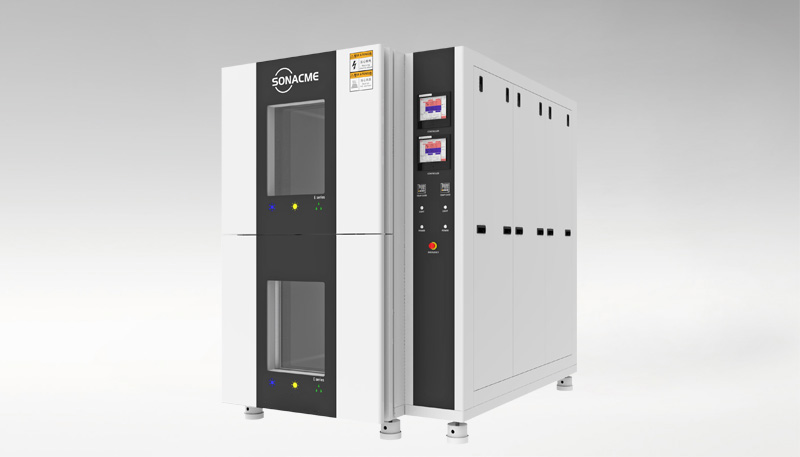
SONACME's Two-Zone Thermal Shock Test Chamber is specifically designed to meet the demanding requirements of MIL-STD-810 Method 503. The elevator-type basket transfer achieves the sub-1-minute transition time required by Procedure I, while the independently controlled hot and cold zones maintain precise temperature stability during soak periods.
Key Technical Parameters for Military Testing:
Parameter | Specification | Method 503 Requirement |
High Temperature | +60°C to +200°C | Covers +71°C and higher |
Low Temperature | -65°C (Condition C) | Covers -57°C and lower |
Transfer Time | <10 seconds (basket) | ≤1 minute |
Temperature Stability | ±0.5°C | Meets MIL-STD-810 |
Volume | Up to 1000L | Accommodates LRU-level assemblies |
Load Capacity | Up to 100 kg | Supports rack-mounted equipment |
Construction features critical for military testing:
· Full-welding SUS304 inner chamber: Ensures hermetic sealing, preventing cross-contamination between zones — essential for repeatable military qualification testing
· Tecumseh/Bitzer/GEA BOCK compressors: Provide reliable cooling to -65°C, meeting the most severe Method 503 cold extremes
· Schneider/Carlo Gavazzi/Mitsubishi electrical components: Military-grade reliability for the control system
· SONACME self-developed controller: Supports programmable multi-cycle testing with automatic temperature logging
Building a MIL-STD-810 Method 503 Test Plan for Semiconductors
A semiconductor-specific Method 503 test plan should include:
1. Life cycle environment analysis: Define the deployment scenarios, storage conditions, and transport profiles that create thermal shock
2. Temperature selection: Use LCE data to select hot and cold extremes — do not default to generic values
3. Cycle count: Minimum 3 cycles for screening; 25+ for qualification; 100+ for highly critical applications
4. Interim electrical testing: Measure key parameters (Vf, Vce(sat), leakage current) between cycle sets to detect parametric drift
5. Post-test analysis: Visual inspection at 10-20x, electrical test, and DPA for any failures
The SONACME Advantage for Military Semiconductor Testing
SONACME Technology is a CASC (China Aerospace Science and Technology Corporation) permanent member and a National High-tech Enterprise. Our chambers are used in aerospace and defense applications where failure is not an option. The LOW GWP technology with R-449A refrigerant provides up to 40% energy savings — reducing operating costs for the high-cycle-count testing that military qualification demands.
For military-grade semiconductor components, thermal shock testing per MIL-STD-810 Method 503 is not optional — it is a mission-critical reliability gate. SONACME's Two-Zone Thermal Shock Test Chamber provides the precision, repeatability, and compliance that military applications demand.
Contact SONACME Technology to discuss your MIL-STD-810 Method 503 testing requirements and learn how our chambers can support your military semiconductor qualification program.
Latest News
-
JESD22-A104 Temperature Cyc...
SONACME two-zone thermal shock test chamber for MIL-...
-
IEC 60068-2-14 Nb: Rapid Te...
SONACME two-zone thermal shock test chamber for MIL-...
-
IEC 60068-2-14 Na/Nb Testin...
SONACME two-zone thermal shock test chamber for MIL-...
-
JEDEC JESD22-A106 Complianc...
SONACME two-zone thermal shock test chamber for MIL-...
-
Meeting ISO 26262 Standards...
SONACME two-zone thermal shock test chamber for MIL-...
-
IEC 60068-2-38 Environmenta...
SONACME two-zone thermal shock test chamber for MIL-...
+86-180 2704 9206
Tel:+86(0769)83234966
E-Mail:info@sonacme.com
Contacts:Marcia/+86-180 2704 9206
Add:Building 7, No.310 Songbai Road, Liaobu Town, Dongguan City, Guangdong


 +86-180 2704 9206
 WhatsApp:+86-180 2704 9206
 info@sonacme.com